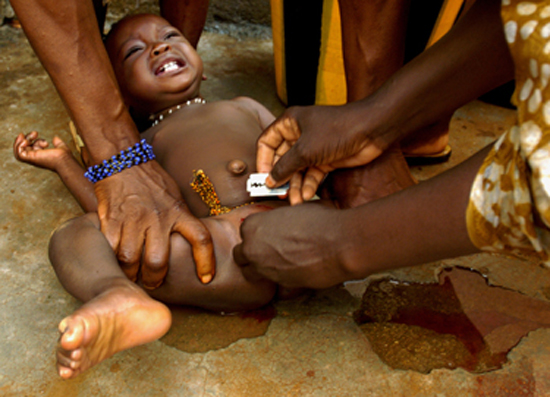
The World Health Organization defines Female Genital Mutilation (FGM) as any procedure that intentionally alters the female genital organs for non-medical reasons. The World Health Organization estimated that more than 200 million girls and women are affected by FGM in the world today. These cutting practices are usually performed upon young girls between the ages of infancy and 15. There are no health benefits to the procedure and FGM often causes serious health complications. The procedure itself is dangerous to the woman due to the risk of infection and it may result in many health complications, including (but not limited to) severe and persistent pain, excessive bleeding, tissue swelling, fever, infections, urinary problems, shock, and, in severe cases, death. There are also many long-term consequences that may result from the procedure, such as urinary problems, vaginal problems, menstrual problems, scar tissue, sexual problems, childbirth complication, and serious psychological problems, such as Post-traumatic Stress Disorder.
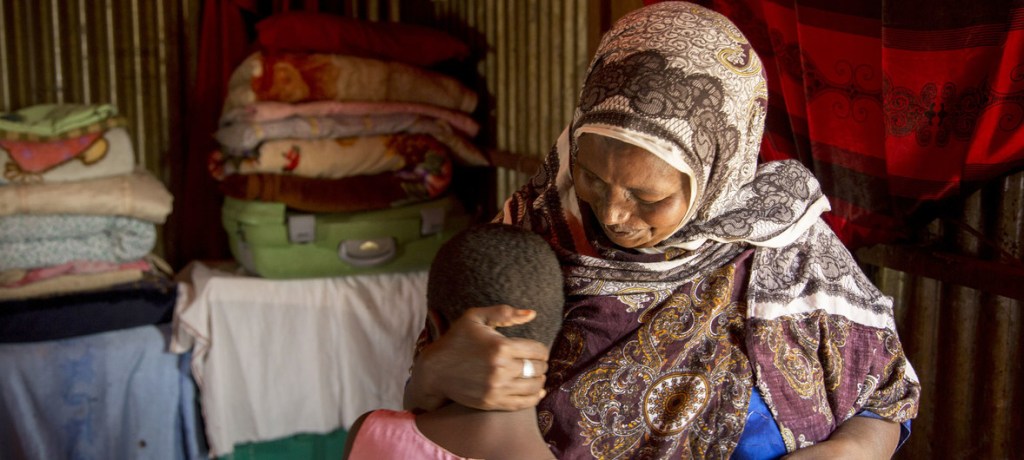
The World Health Organization recognizes four major types of FGM. Clitoridectomy is the first type and includes the partial or total removal of the clitoris, the part of women’s genitalia that is associated with pleasure in sexual encounters. Excision is the second type and is the partial or total removal of both the clitoris and the labia majora of the vulva. Type one and type two are the most common types of FGM accounting for almost 85% of all FGM. Type three is referred to as infibulation and narrows the vaginal opening by creating a seal over the vaginal opening—like an artificial hymen. This is performed by repositioning the labia majora or minora and sewing them together. This may include removing the clitoris but does not have to. The final type of FGM encompasses all other harmful procedures to the female genitalia for non-medical purposes.
While this practice is internationally recognized as a human rights violation, it is still practiced in many parts of the world. Mutilations are mostly performed in Africa, the Middle East, and Asia. It is recognized as a human rights violation because it reflects deeply rooted discrimation against women. In many of these areas FGM is a socially normative behavior. It is considered a necessary part of raising a girl and properly preparing them for adulthood and marriage. It is believed to discourage sexual behavior, especially premarital sex—if a woman cannot enjoy sex, she will not seek it out, and sex can remain a duty to perform for the sake of her husband’s pleasure. Areas that hold negative beliefs about women’s sexuality are more likely to continue the practice of cutting women’s genitalia. Internationally and within the United States steps are being made to reduce the prevalence of FGM by encouraging community involvement and through laws passed against mutilation. However, there are many obstacles to enforcing such laws, as some countries and governments still believe in upholding the practice.

(2012). Retrieved from http://thinkingaboutphilosophy.blogspot.com/2012/06/female-genital-mutilation.html
(2019). Retrieved from https://www.kent.fire-uk.org/your-safety/my-safety/female-genital-mutilation/
Dockery, W. (2018). Women preparing for Female Genital Mutilation. Retrieved from https://www.dw.com/en/where-does-the-arab-world-stand-on-female-genital-mutilation/a-42472991
Female genital cutting. (2019, April 1). Retrieved October 31, 2019, from https://www.womenshealth.gov/a-z-topics/female-genital-cutting.
Female genital mutilation. (2018, January 31). Retrieved October 31, 2019, from https://www.who.int/news-room/fact-sheets/detail/female-genital-mutilation.
Goodwin, G. (2019). Retrieved from https://news.un.org/en/story/2019/02/1032061
 Global Health